









A digital piano buying guide should account for what happens before and after you play. Your ideal instrument needs the right touch and sound, but its support, power supply and storage routine also have to fit the room.
This guide compares a cabinet left ready with a separate instrument that moves. The three examples illustrate those decisions without treating a portable label as a complete setup.
Table of Contents
- Describe a Normal Practice Session
- Try the Range and Physical Response
- Count Everything That Must Be Moved
- Test Sound and Daily Controls in Place
- Make the Pedals and Connections Serve the Routine
- Finish With a Complete Setup Check
- Questions Before You Commit
- Choose a Setup That Fits the Session
Describe a Normal Practice Session
Describe a normal practice session: where you play, how you listen, whether the piano stays there and who moves it. Add the music and any lesson requirements so convenience does not take the place of the response you need.
Keep that description beside the shortlist. It should explain both what you want to play and what must happen to make playing possible.
Try the Range and Physical Response
Match the key range to the music. An 88-key instrument provides the full piano range; fewer keys reduce the notes available, even if the body is easier to place.
Touch sensitivity describes the sound's response to playing force, while weighting is physical resistance. Try quiet notes, firmer chords and repetition where possible. Choose the mechanism by its response to your playing rather than the category label alone.
Donner DDP-80 Simple Daily Piano Playing

Pros
- Weighted graded action
- Three-pedal unit
Cons
- Function changes use key combinations
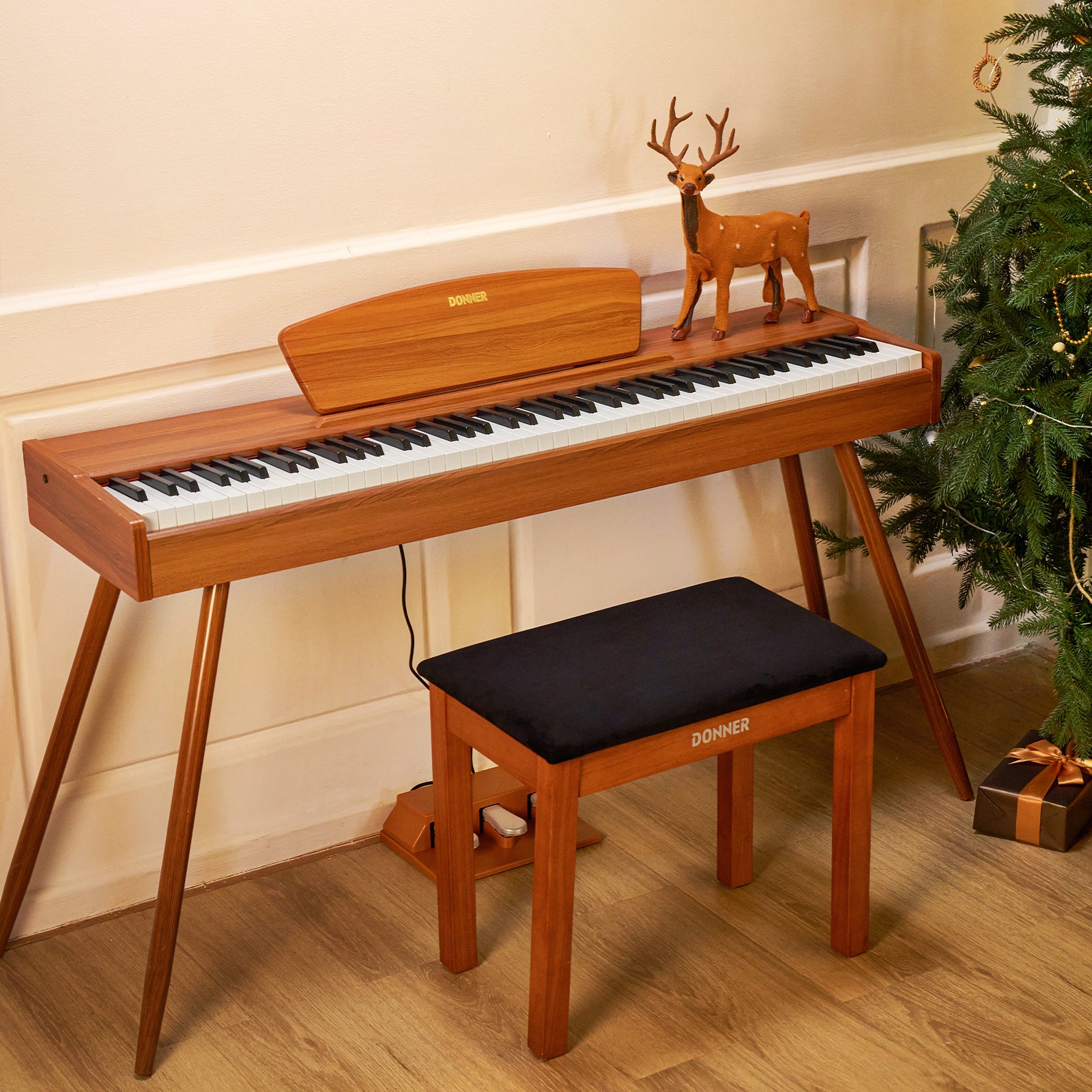
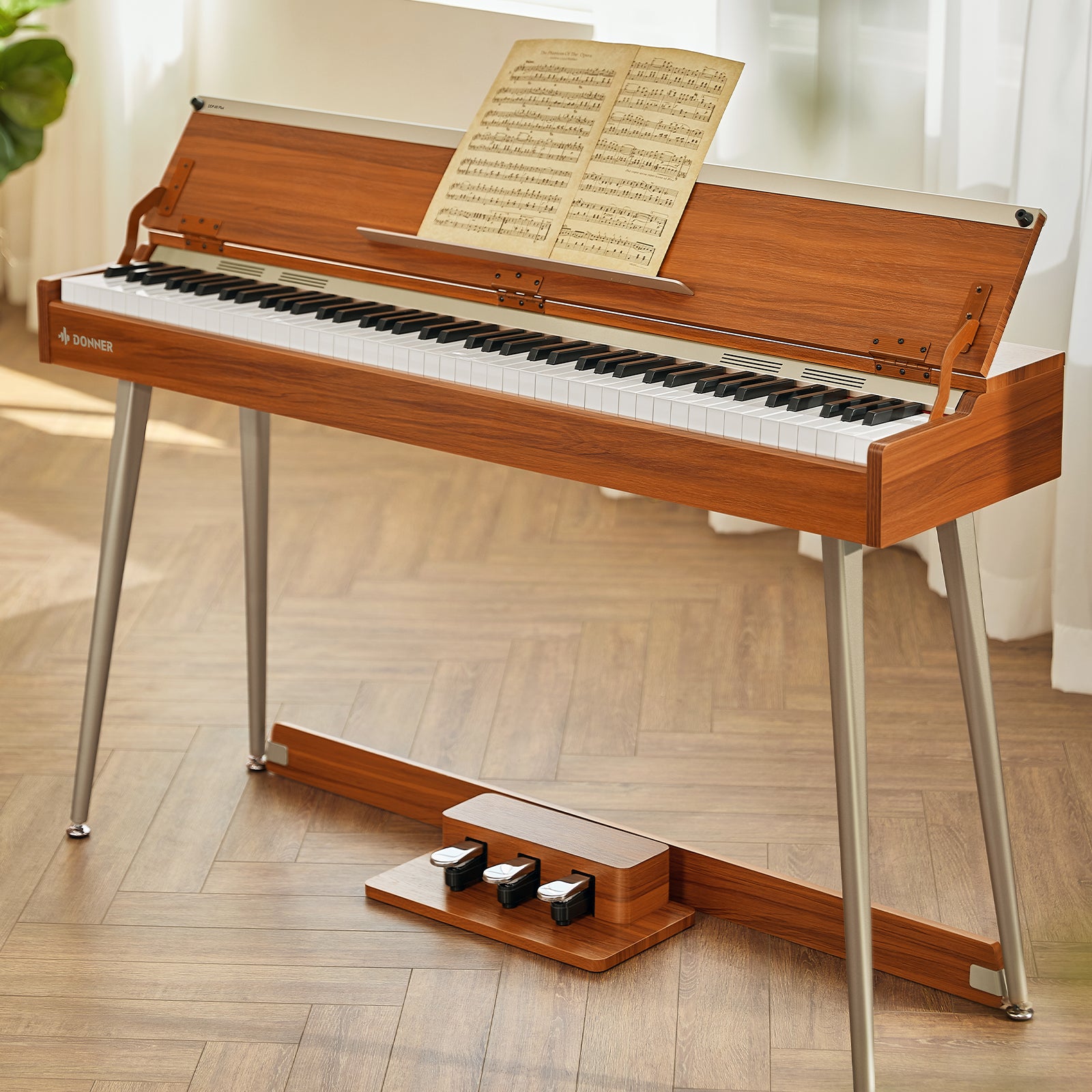
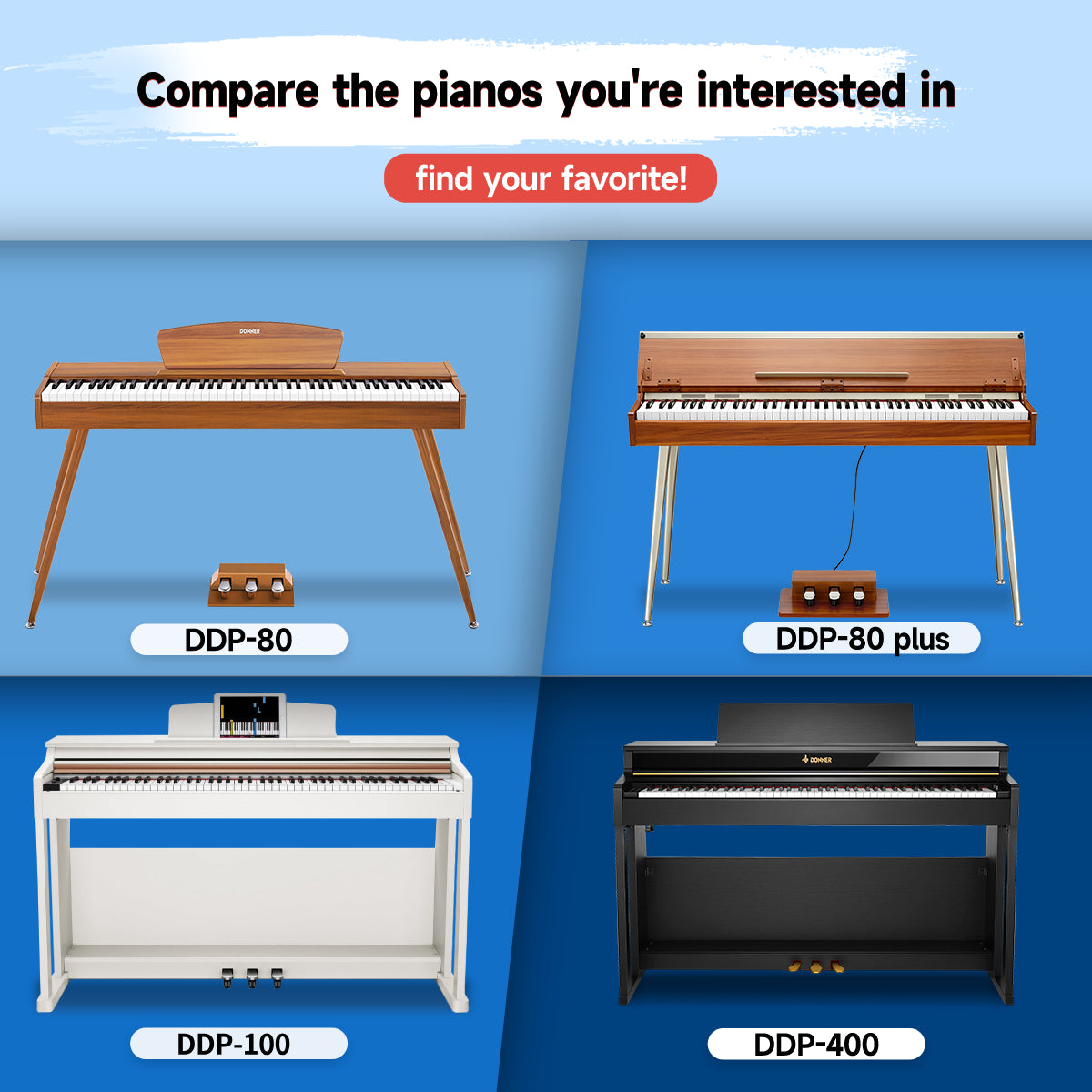
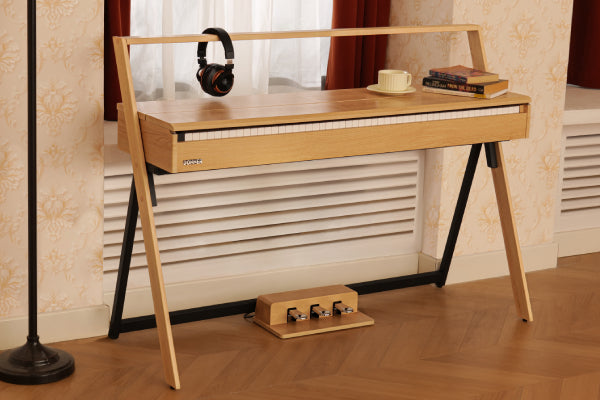
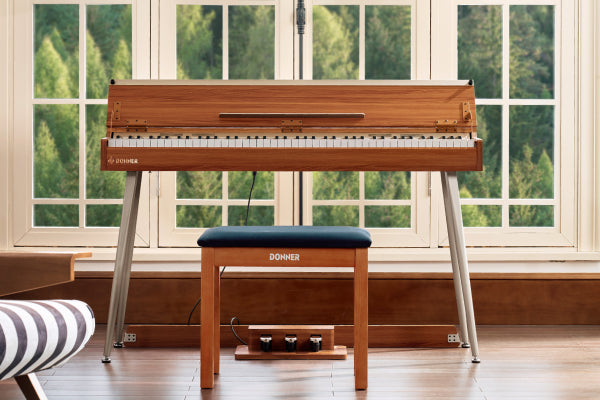
If the daily goal is to sit down at an assembled piano, Donner DDP-80 digital piano offers a furniture setup with 88 graded hammer-action keys and six sounds. Its three-pedal unit keeps the foot controls with the instrument. The main question is whether this fixed routine suits the space better than moving separate equipment.
The standard box lists the stand parts and three-pedal unit; the piano-only option excludes a bench. USB-MIDI sends playing information, while AUX output carries the instrument’s sound. Some function changes use pedal-and-key combinations, so the uncluttered controls are worth trying as a routine, not just judging by appearance.
Count Everything That Must Be Moved
Trace the path from storage to the playing position with all the equipment in mind: keyboard, stand, seat and pedals. Confirm that you can place each item securely and store it as planned.
Compare body weight with body weight and complete furniture with complete furniture. Power is another decision: portable does not establish battery operation, so identify the exact model's supported supply before planning a location away from a socket.
Donner DEP-1S Flexible First Setup

Pros
- Full 88-key range
- Adjustable X-style stand
Cons
- Semi-weighted rather than hammer action
If your instrument and support need to come apart when the room changes use, Donner DEP-1S digital piano offers 88 semi-weighted keys and an adjustable double-X stand. The lighter action may suit songs and chords, but should be tried against your lesson needs. Full range and room flexibility are separate from an acoustic-style mechanism.
The standard kit lists an adjustable double-X stand, sustain pedal, music rest and adapter. Its 128 tones and 100 rhythms support exploring songs, while a metronome and internal note recording/playback give you ways to practise and listen back. The separate support allows a different room arrangement from a furniture piano.
Test Sound and Daily Controls in Place
Hear the same passage through the speakers and intended headphones at comfortable levels. Then find the main piano voice, volume and the practice function you expect to use most. This tests the daily routine as well as the sound.
A cabinet can keep that routine ready between sessions. A larger voice library is valuable when you use it, not simply because it is larger.
Donner DDP-75 Feature-Rich Home Practice

Pros
- Weighted hammer action
- Accompaniment and recording
Cons
- 31 kg furniture instrument
For a room where the piano can remain ready, Donner DDP-75 digital piano combines 88 hammer-action keys with a covered cabinet and three pedals. Its 31 kg furniture format makes a permanent location more relevant than frequent storage. The metronome and recording/playback functions can serve the session once the placement is settled.
Its 238 tones, 200 rhythms and recording/playback functions give accompaniment and reviewing a passage a place in the same instrument. The 128-note polyphony describes simultaneous voices, rather than the number of sounds in the menu.
Make the Pedals and Connections Serve the Routine
Place the pedal or pedal unit so your foot reaches it from a stable seated position. Include the space for pedal movement when measuring the setup.
For connected devices, decide whether you need MIDI performance data, the piano's audio or accompaniment coming into the instrument. Verify the supported route for that task; the shape of a socket or the presence of Bluetooth does not settle all three.
Finish With a Complete Setup Check
Mark the support, seat, pedals, power supply and listening equipment as included, already owned or needed. Add only the necessary missing items to each exact configuration.
Finally, check that the complete arrangement can be used and stored as described at the start. A body-only offer and a furniture package are fair comparisons only when both totals cover your actual session.
Questions Before You Commit
Does a Compact Piano Have Fewer Keys?
Not necessarily. A shallow or compact body may still contain 88 full-size keys. Check key count and actual instrument dimensions independently; package size and assembled furniture size are not the same measurement.
Can Headphones Remove All Playing Noise?
No. They provide private electronic listening, but key and pedal mechanisms can still be audible and transmit vibration. Try the intended room and keep any support or noise-control arrangement stable.
Choose a Setup That Fits the Session
Choose for the practice session you described: the touch required by the music, the listening route you prefer and the work of making the space ready. Confirm the selected equipment against that routine before buying.






Leave a comment
All comments are moderated before being published.
This site is protected by hCaptcha and the hCaptcha Privacy Policy and Terms of Service apply.