









If your piano will move between rooms or locations, compare the whole task before choosing a portable body. The stand, pedal, power supply and protection move too. If the instrument will stay in one place, an assembled cabinet may solve a different problem.
This ten-model comparison includes three Donner choices and seven alternatives, with a clearly labelled semi-weighted option outside the hammer-action recommendations. It compares key control and practical installation together without treating portable as a promise of low weight.
Donner’s Black Friday/Cyber Monday 2026 campaign runs through a November 5–18 warm-up, November 19–30 main event and December 1–3 return event. The Christmas campaign follows on December 4–25.
Weighted Digital Piano Shortlist
- Donner DDP-75 Digital Piano
- Roland FP-10 Digital Piano
- Yamaha P-225 Digital Piano
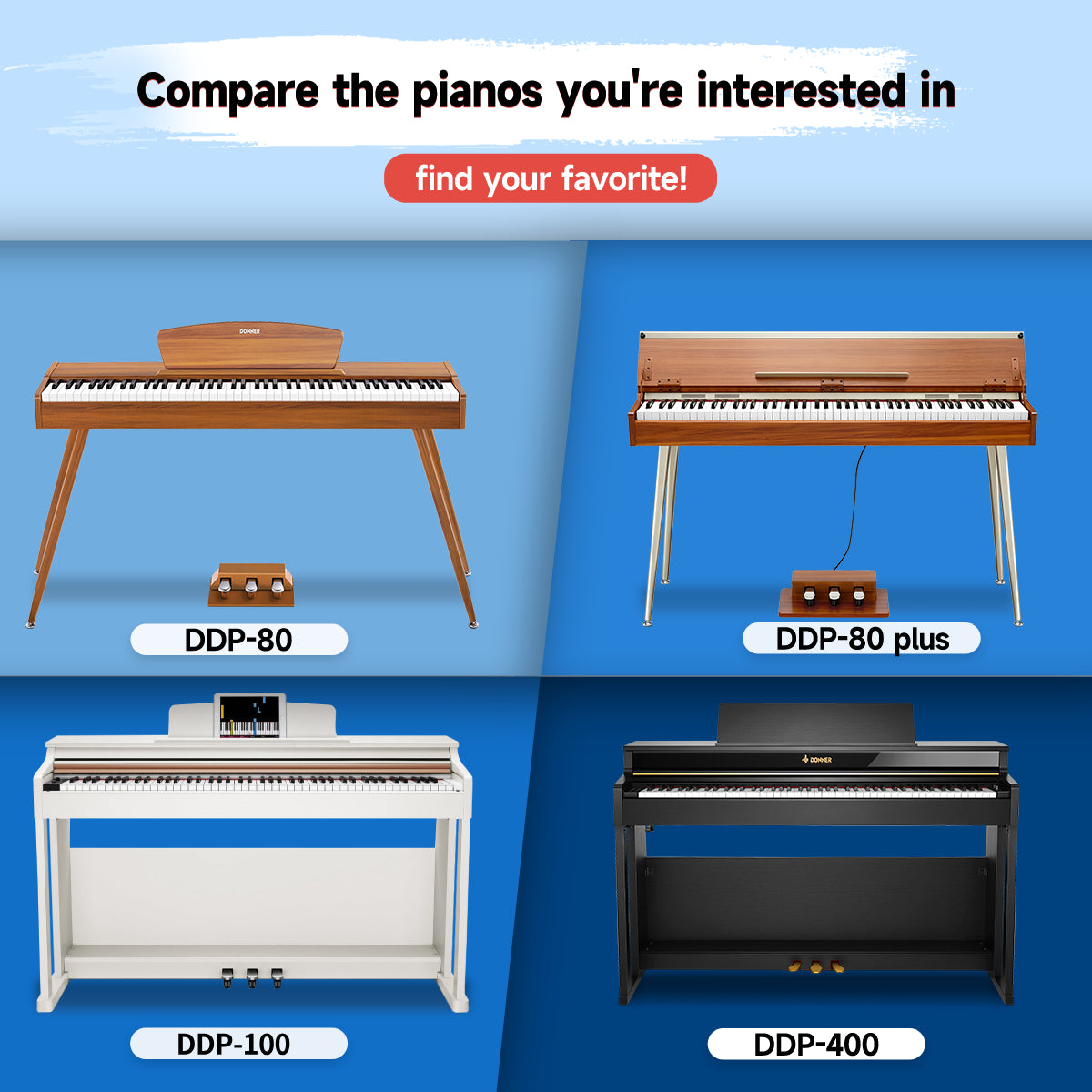
- Donner DDP-80 Digital Piano
- Casio Privia PX-S1100 Digital Piano
- Roland FP-30X Digital Piano
- Yamaha P-525 Digital Piano
- Kawai ES120 Digital Piano
- Kawai CN201 Digital Piano
- Donner DEP-1S Digital Piano (Semi-weighted alternative)
Weighted Digital Piano Comparison
Prices are dated observations for the selected configuration, not live quotations. A dash means that no comparable local base price is supplied. Observed November 15, 2026 UTC.
| Model | Key Action | Practice Format | Playing Trade-Off | Price |
|---|---|---|---|---|
| Donner DDP-75 digital piano | Fully weighted hammer action | Furniture piano | Accompaniment; fixed practice station | AUD 759.99 |
| Roland FP-10 | PHA-4 Standard graded hammer | Portable body | Graded action with a smaller sound-engine allowance | — |
| Yamaha P-225 | GHC graded hammer | Portable body | Compact mechanism; evaluate rear-key leverage | — |
| Donner DDP-80 digital piano | Weighted hammer action | Furniture piano | Six sounds; shortcut-based controls | AUD 759.98 |
| Casio Privia PX-S1100 | Smart Scaled Hammer Action | Slim portable body | Shallow body; separate support | — |
| Roland FP-30X | PHA-4 Standard graded hammer | Portable body | Separate furniture; dedicated outputs | — |
| Yamaha P-525 | GrandTouch-S with wooden white keys | Portable body | Wooden-white-key response; 22 kg body | — |
| Kawai ES120 | Responsive Hammer Compact graded | Portable body | Separate furniture; internal recorder | — |
| Kawai CN201 | Responsive Hammer III graded | Furniture piano | Installed continuous sustain; fixed 43 kg station | — |
| Donner DEP-1S digital piano | Semi-weighted alternative | Portable kit | Lighter resistance, not acoustic-style hammer action | AUD 337.99 |
The semi-weighted option is a lighter-touch alternative, not a hammer-action recommendation.
Donner DDP-75 Covered Home Practice

Pros
- Hammer-action keyboard with selectable touch response
- Accompaniment and recording functions
Cons
- Listed 31 kg furniture instrument
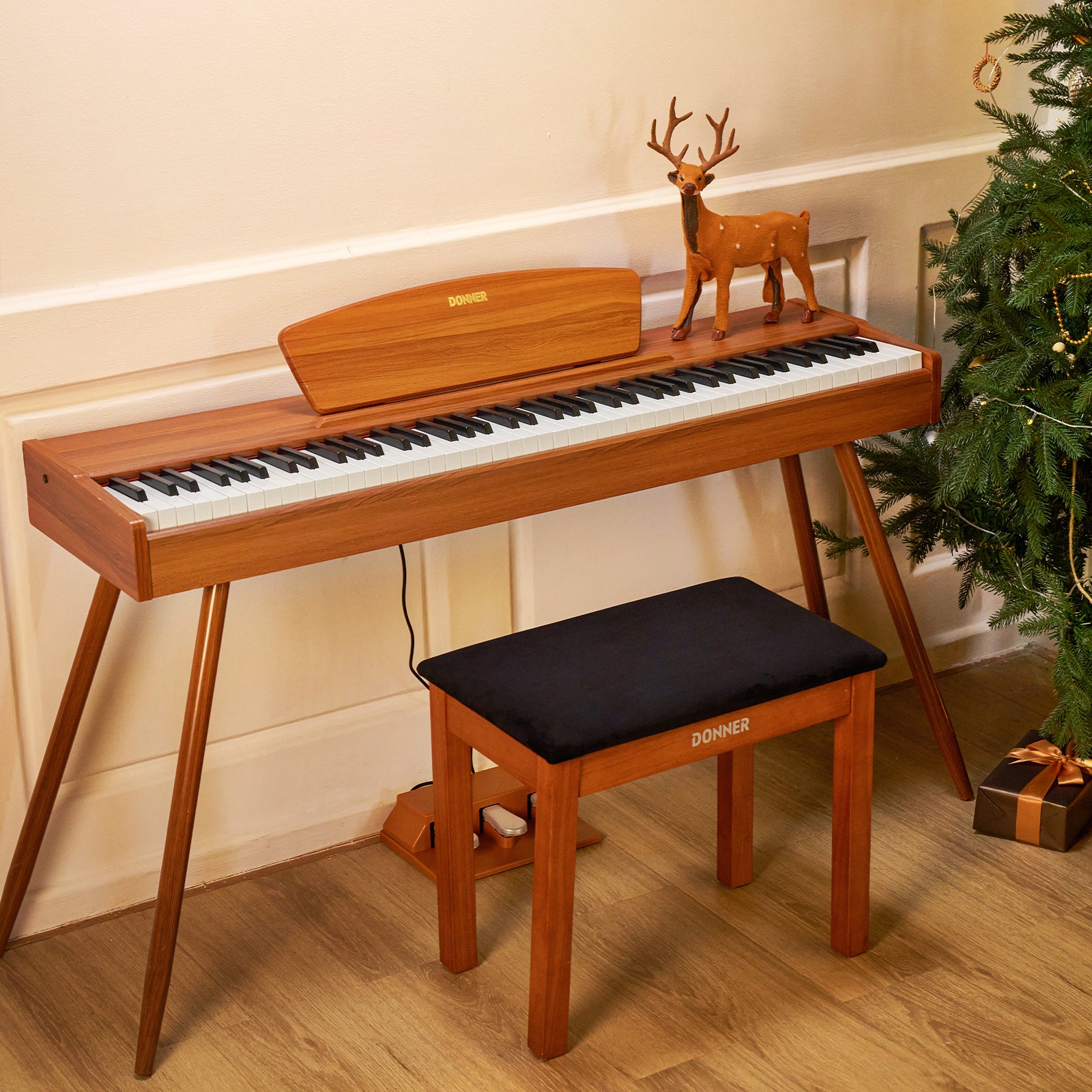
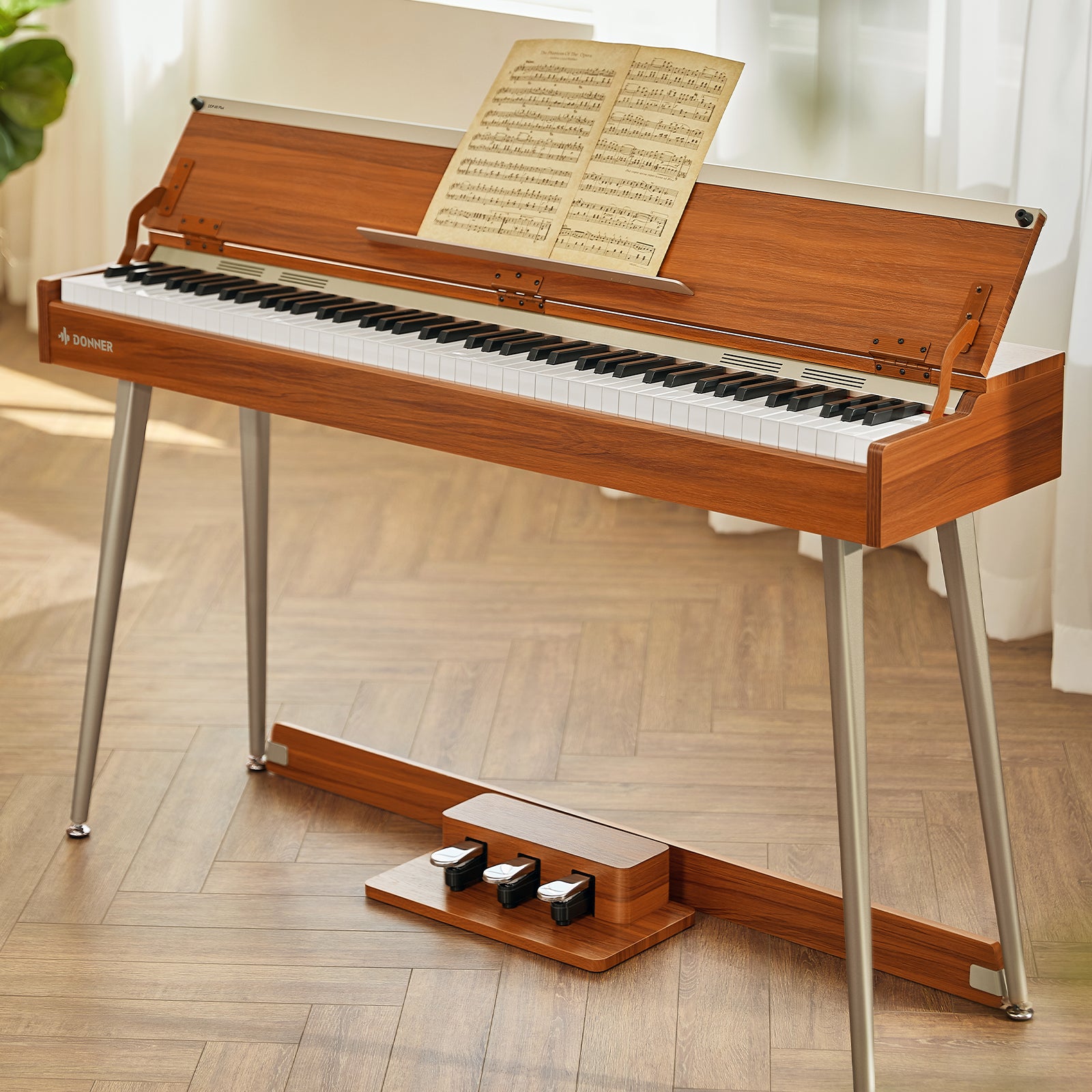
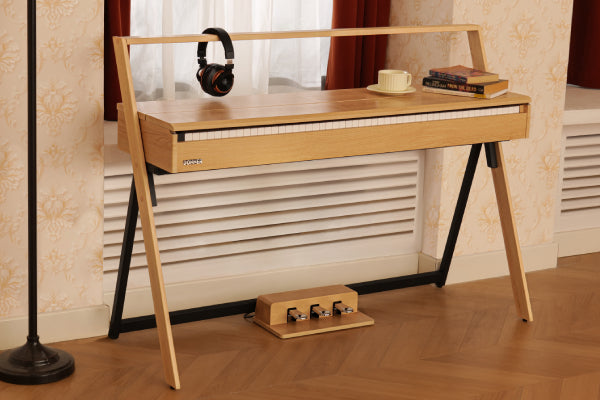
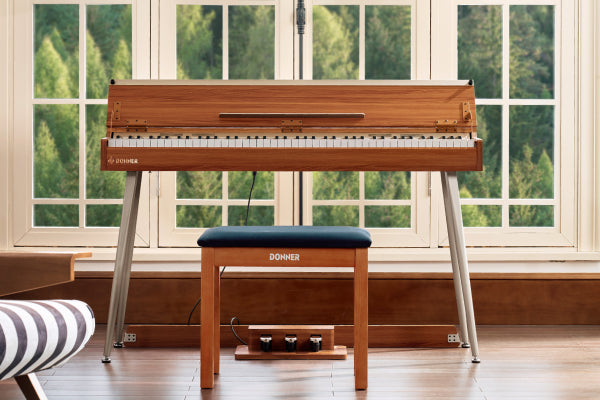
Donner DDP-75 digital piano is the fixed-station side of this comparison. Its 88 fully weighted hammer-action keys and selectable touch response suit a home playing trial, while the furniture format is intended for a chosen position. Judge the keyboard and the moving task separately rather than assuming every digital piano is easily relocated.
The 238 tones, split and dual voices, metronome and record/playback support different practice tasks, with 128-note polyphony. Headphone use mutes the built-in speakers. At a listed 31 kg, this furniture instrument belongs in a planned position rather than a routine carrying arrangement.
Roland FP-10 Graded Action First
Pros
- PHA-4 Standard graded hammer action
- Twin Piano for side-by-side practice
Cons
- 96-note maximum polyphony
Roland FP-10 digital piano puts an 88-key PHA-4 Standard mechanism in a portable body rather than an assembled cabinet. Graded weighting, escapement and Ivory Feel are reasons to try the action. The support and other equipment still need to form a workable setup wherever you plan to take it.
Twin Piano divides the keyboard into two equal pitch ranges for side-by-side practice. The panel offers 15 tones and maximum polyphony is 96 notes. That gives less polyphonic headroom than the FP-30X, though the relevance depends on the sounds and sustain you use.
Yamaha P-225 Compact Graded Keyboard
Pros
- Compact GHC graded hammer mechanism
- CFX piano sound with 24 voices
Cons
- Compact action needs a personal playing trial
Yamaha P-225 digital piano combines a compact body with 88 GHC graded hammer keys. The reduced format is relevant when organising space at more than one location, but it does not by itself complete a movable setup. Compare key leverage and the support arrangement you will need at the destination.
CFX piano sound, 24 voices and 192-note polyphony give it a piano-focused sound engine with room for other tones. Dual, split and duo modes support different playing arrangements; headphone sockets and AUX outputs provide distinct listening connections.
Donner DDP-80 Six-Tone Home Cabinet

Pros
- Weighted hammer-action keyboard
- Six tones in the Sound Upgrade configuration
Cons
- Tone and transpose changes use control combinations
Donner DDP-80 digital piano in Sound Upgrade configuration is a home-cabinet alternative to repeatedly moving a separable body. It offers 88 weighted hammer-action keys, six tones and 128-note polyphony. Choose the configuration deliberately, then consider whether leaving that station ready better fits your routine.
The three-pedal unit supports a fixed practice arrangement; wired headphones and USB-MIDI serve different listening and data roles. Tone selection and transpose use pedal-and-key combinations, so learn those shortcuts before relying on quick changes during practice.
Casio Privia PX-S1100 Shallow Instrument Body
Pros
- Slim 88-key hammer-action body
- 18 tones and 192-note polyphony
Cons
- Stand purchased separately
Casio Privia PX-S1100 digital piano reduces body depth to 23.2 cm while retaining 88 Smart Scaled Hammer Action keys. Its overall dimensions are 132.2 × 23.2 × 10.2 cm. Use those measurements to plan space and protection, not as evidence that the whole setup can be moved effortlessly.
The 18 tones and 192-note maximum polyphony give a focused sound set. The slim body does not include its own furniture solution: the stand is separate. Allow for stable support before treating the shallow chassis as a finished space-saving setup.
Roland FP-30X Portable with Audio Outputs
Pros
- PHA-4 Standard graded action
- Dedicated audio outputs and two headphone sockets
Cons
- Furniture stand and pedal unit cost extra
Roland FP-30X digital piano offers 88 PHA-4 Standard keys with escapement and Ivory Feel in a separable format. Its 256-note maximum polyphony and split, dual and Twin Piano modes address playing choices. Compare the action independently from the job of moving the body, support and pedal equipment.
Dedicated L/Mono and R outputs give a separate external audio path, alongside two headphone sockets. Furniture stand and three-pedal unit are compatible options rather than assumed base-package contents. Include those choices when comparing its total with an assembled cabinet.
Yamaha P-525 Wooden-White-Key Action
Pros
- GrandTouch-S action with wooden white keys
- Two concert-grand sound sources
Cons
- 22 kg instrument body
Yamaha P-525 digital piano illustrates why portable and lightweight are different claims. Its GrandTouch-S mechanism uses wooden white keys, synthetic ivory/ebony surfaces and escapement. Compare the playing response you want against the practical demands of moving a substantial instrument, rather than choosing the format name alone.
CFX and Bösendorfer Imperial piano sounds work with Virtual Resonance Modeling and 256-note maximum polyphony. The instrument body weighs 22 kg. Separable construction makes the setup flexible, but that weight is a real consideration when planning regular moves.
Kawai ES120 Portable Recording Practice
Pros
- Graded Responsive Hammer Compact action
- Three-song internal recorder and line outputs
Cons
- Furniture stand and pedal board cost extra
Kawai ES120 digital piano combines an 88-key Responsive Hammer Compact graded action with a separable body. That format lets you choose the support arrangement, but each practice location still needs one. The internal three-song recorder is a separate benefit if you want to hear your playing back.
There are 25 sounds and 192-note maximum polyphony, plus dedicated L/MONO and R line outputs. The compatible furniture stand and three-pedal board are separate options. Price the intended assembled setup as well as the piano itself, especially if it will stay in one room.
Kawai CN201 Integrated Home Station
Pros
- RHIII graded mechanism with triple-sensor detection
- Installed half-pedal sustain system
Cons
- 43 kg assembled cabinet
Kawai CN201 digital piano is for the location where the complete instrument can remain assembled. Its 88 Responsive Hammer III keys combine graded weighting, counterweights, let-off and triple-sensor detection. Try the same notes as on the portables, then compare the benefit of installed pedals with the reality of leaving a cabinet in place.
The Grand Feel three-pedal system supports half-pedal sustain, with 19 tones and 192-note maximum polyphony. This joins action and installed pedals in one home arrangement. The assembled weight is 43 kg, so decide on its position before treating it as interchangeable with a portable body.
Donner DEP-1S Semi-Weighted Alternative

Pros
- Lighter key resistance
- Split/layer and metronome functions
Cons
- Semi-weighted, not hammer action
Donner DEP-1S digital piano offers lighter semi-weighted resistance in an 88-key kit. It is a distinct alternative, not a hammer-action portable. Velocity sensitivity changes the sound according to attack; it does not change the mechanism. Consider that touch preference separately from how you will relocate the kit.
Split/layer, metronome, internal note-event recording and 128 tones provide practice functions. The described kit includes an X-style stand and single sustain pedal; a bench depends on the selected bundle. It offers a different touch rather than the same piano mechanism for less money.
How to Compare the Playing Experience
Start with the playing experience you want to keep using: soft notes you can control, a stable position and pedals that do what the music requires. Then compare sound and connections. These criteria explain the recommendations; a specification list cannot substitute for trying two actions with the same passage.
Action and Dynamic Response
Physical weighting is the resistance and return you feel. Graded weighting changes that resistance across the keyboard, while velocity response changes the sound according to how you strike a key. A touch-curve setting adjusts that response relationship, not the underlying mechanism.
Play a few quiet notes, a repeated note and a chord, including notes near the back of the keys. Listen for control and feel for return. A larger polyphony number describes the maximum simultaneous note capacity, not more realistic resistance. Compare those things separately rather than choosing the heaviest action or largest number by default.
Stable Support and Pedal Needs
A separable piano body needs appropriate support and a usable seat and pedal position. A cabinet brings a fixed installation, but the cabinet shape alone does not establish a better key mechanism. Compare the selected package, including the parts that still need buying or assembly.
Three pedals do not by themselves prove half-pedal support. The piano and compatible pedal arrangement must support that function together. If graded sustain matters for your music, try that exact combination rather than counting pedals in the picture.
Headphones and Real Connection Paths
Test wired headphones through the actual headphone socket, with any required adaptor. Check the volume and speaker behaviour in that arrangement. An audio output, a headphone output and MIDI each serve different purposes.
MIDI carries playing instructions rather than the sound of the piano. USB and Bluetooth must be matched to their specified functions; a connection used for note data or backing-track input does not establish audio recording or wireless headphone output. Trace the listening or recording path you need all the way to its destination.
What Will You Actually Need to Move?
Work through the move as a complete job: instrument body, stand, pedal, power supply and protection. Where will each item go, and what must be disconnected or assembled? Portable describes a separable format, not battery power or an assurance that one person can carry it comfortably.
Compare that routine with leaving a cabinet assembled in one room. If you rarely move the instrument, the benefit may lie in a ready practice position rather than a removable body. If you do move it, compare actual weight and the support you need at both locations.
Questions Before You Buy
Do Weighted Digital Pianos Need Tuning?
No. The digitally generated notes do not need acoustic-piano tuning. Keys, pedals and other mechanical parts can still develop faults or need service. A digital sound source does not make the whole instrument maintenance-free.
Can I Buy a Used Weighted Digital Piano?
Yes, after checking its condition and complete setup. Play all keys, try quiet and louder notes, and test controls, speakers, headphone output and the intended pedal. Confirm power supply, support and other included items with the seller agreement. A low asking price does not establish that everything works.
Make Room for Regular Playing
Choose the action on which you can repeat quiet notes and chords with control. Then price the support, pedal and listening arrangement that will stay ready for practice. If lighter resistance is the deliberate aim, keep that choice separate from hammer action. Extra sounds are useful only after the instrument and its setup suit your playing.





Leave a comment
All comments are moderated before being published.
This site is protected by hCaptcha and the hCaptcha Privacy Policy and Terms of Service apply.