









A piano that stays ready in one room and one that is put away after every session solve different problems. These six affordable digital pianos let you compare the playing action with the work of supporting, powering and storing the whole setup.
A compact body can still have 88 keys, and a portable format does not necessarily mean battery operation. The useful question is whether the complete arrangement fits the way you practise at home.
Six Pianos for Different Home Setups
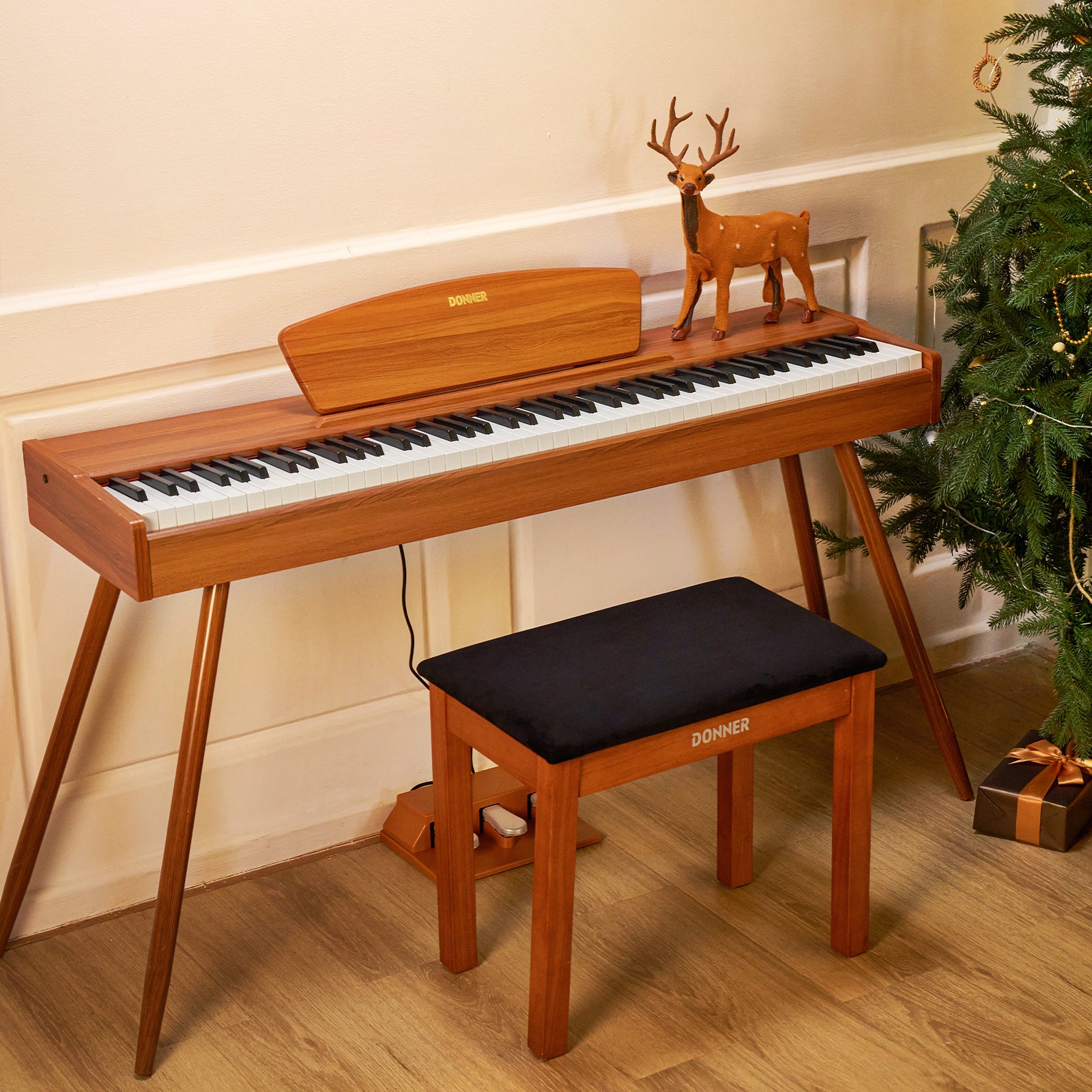
- Donner DDP-75 for a Practice Space That Stays Ready
- Yamaha P-145BT With Separate Support
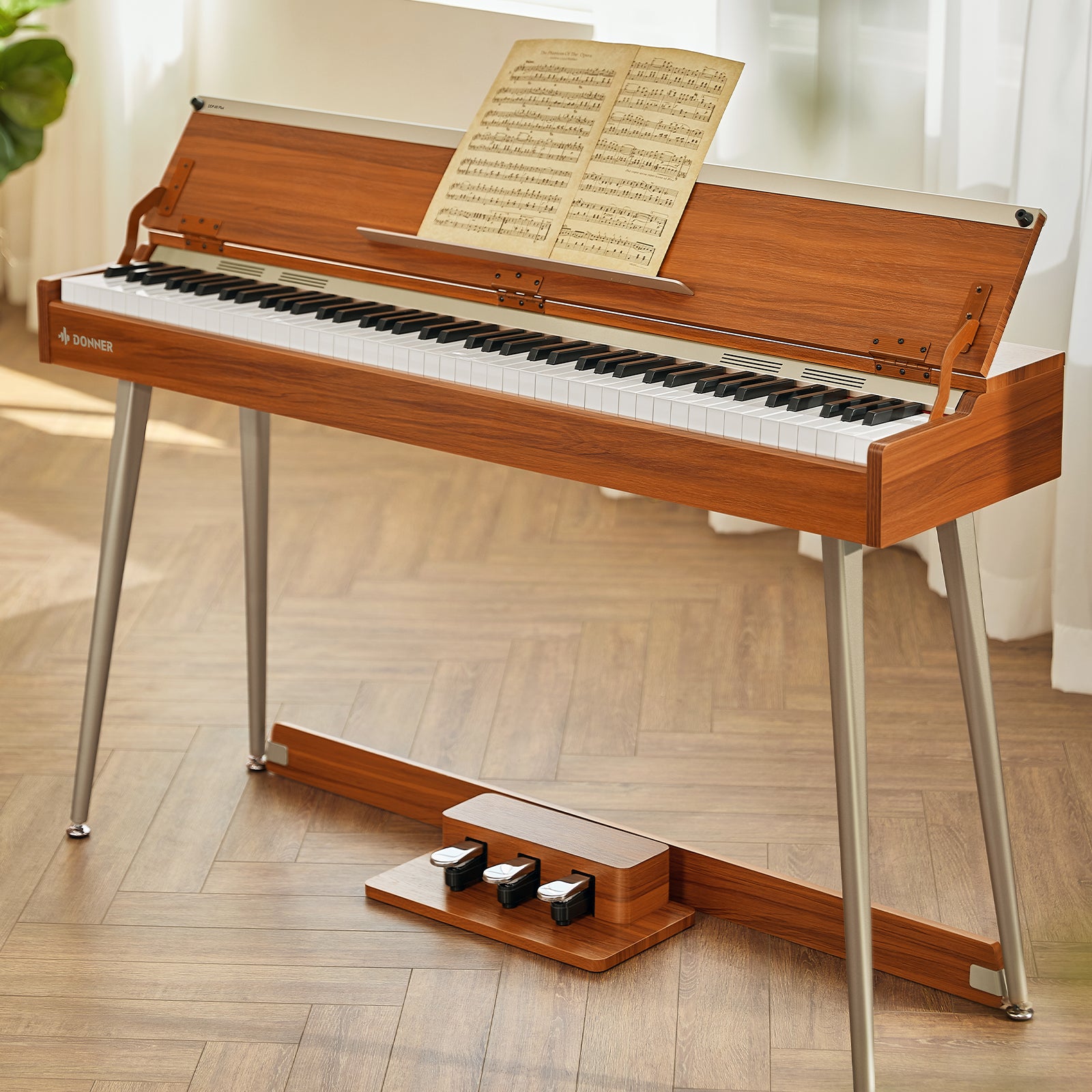
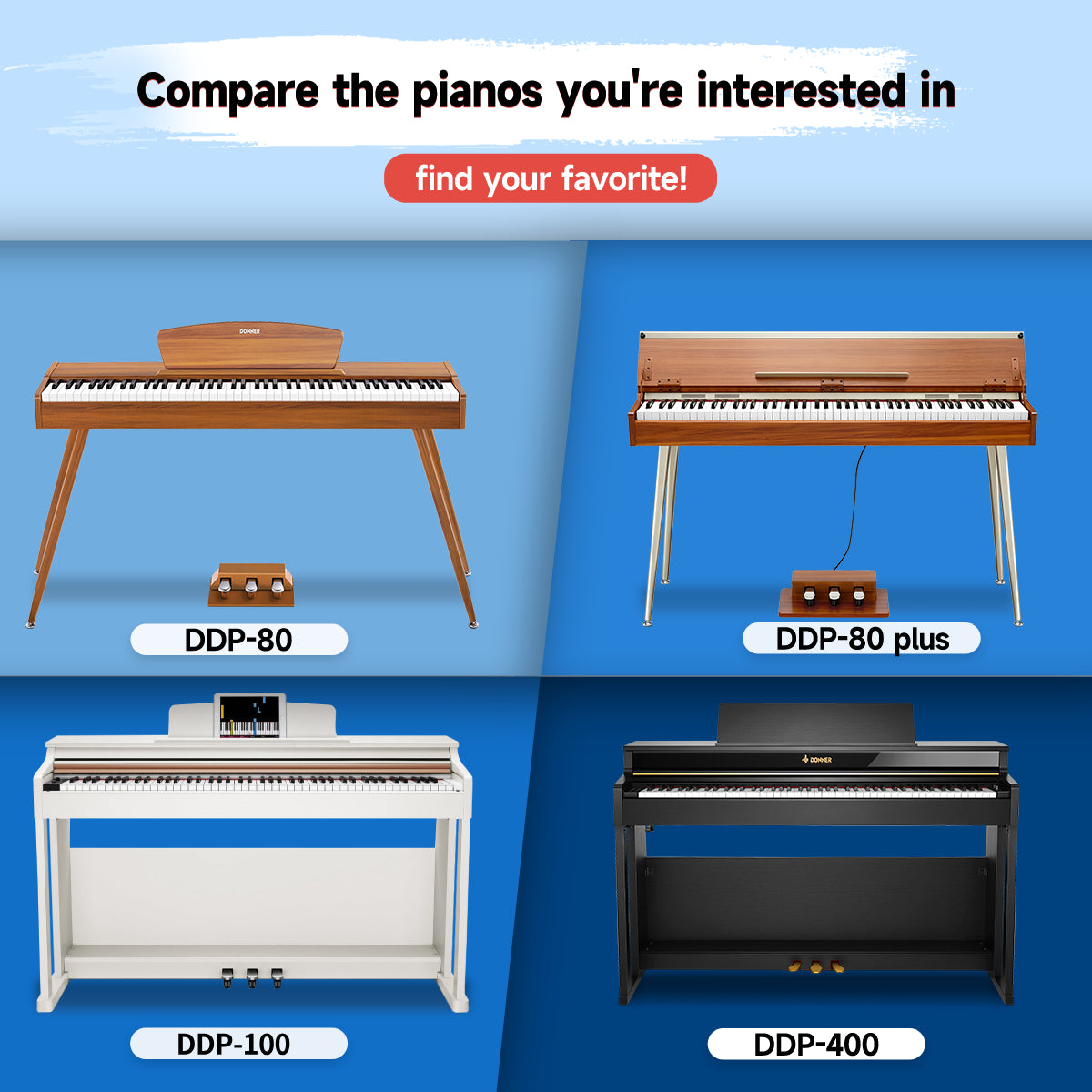
- Donner DDP-80 for a Permanent Piano Position
- Roland FP-10 for Hammer Action in a Separate Body
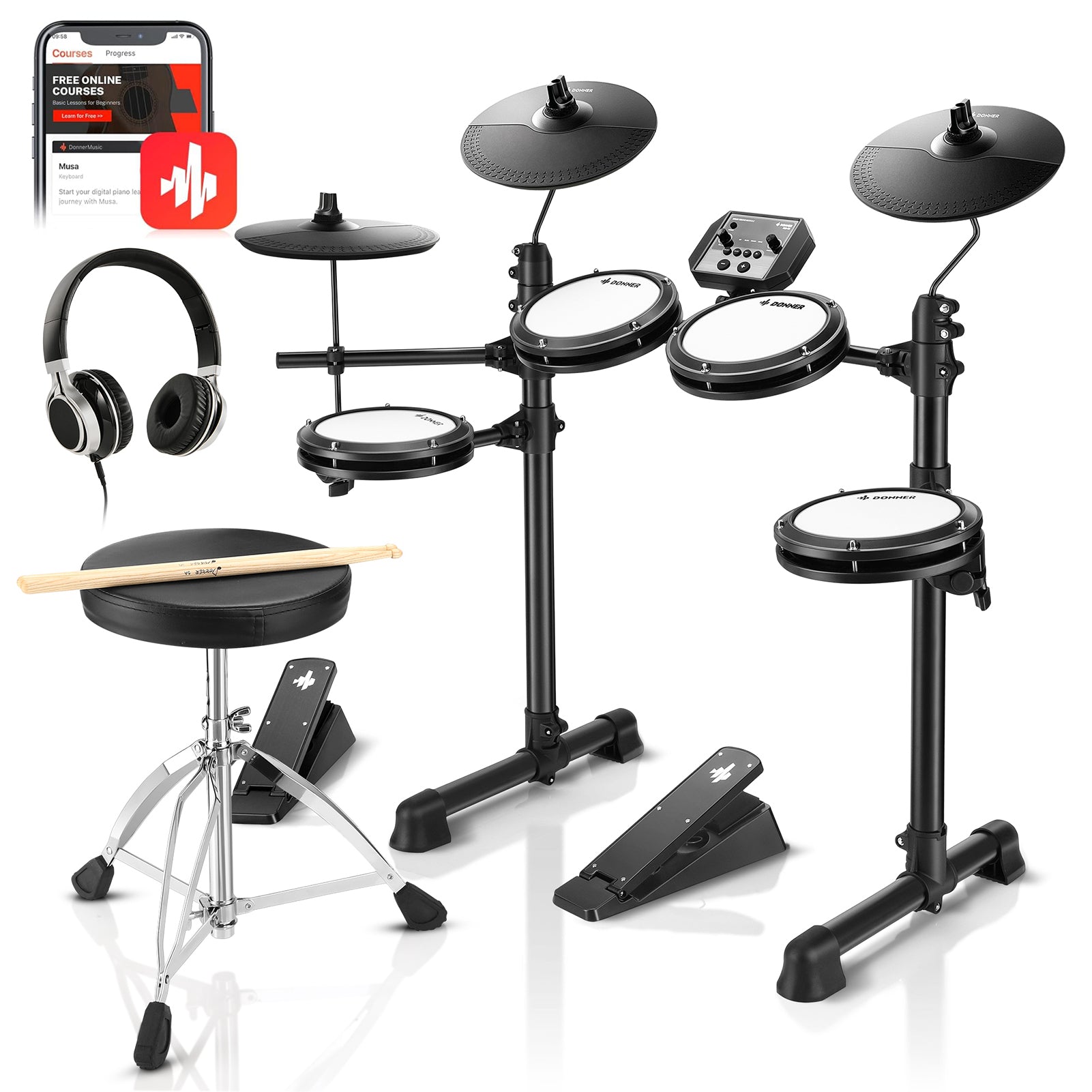
- Donner DEP-1S With an Adjustable X-Style Stand
- Casio CDP-S110 for a Battery-Powered Setup
Compare Action and Setup
| Model | Action | Selected Setup | Sound Range | Price |
|---|---|---|---|---|
| Donner DDP-75 digital piano | 88 hammer-action keys | Furniture stand; three pedals | 238 voices | AUD 759.99 |
| Yamaha P-145BT | 88 graded hammer-action keys | Portable body; support separate; pedal switch | 10 voices | — |
| Donner DDP-80 digital piano | 88 graded hammer-action keys | Furniture stand; three pedals | 6 voices | AUD 759.98 |
| Roland FP-10 | 88 graded hammer-action keys | Portable body; support separate; pedal switch | 15 voices | — |
| Donner DEP-1S digital piano | 88 semi-weighted keys | X-style stand; sustain pedal | 128 voices | AUD 337.99 |
| Casio CDP-S110 | 88 graded hammer-action keys | Portable body; support separate | 10 voices | — |
Prices refer to the selected configurations. A dash indicates that no price is stated in this comparison.
Donner DDP-75 Feature-Rich Home Practice

Pros
- Weighted hammer action
- Accompaniment and recording
Cons
- 31 kg furniture instrument
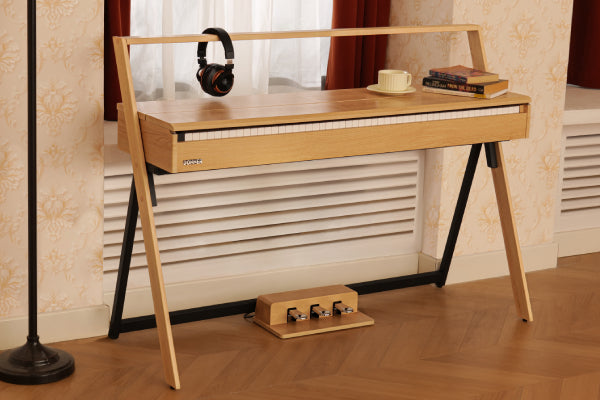
Donner DDP-75 digital piano brings an 88-key hammer-action keyboard into a cabinet with a lid and three pedals. The mechanism gives the keys physical resistance for a weighted playing preference, while selectable touch response adjusts how the sound reacts to your playing.
Its 238 tones, 200 rhythms and recording/playback functions give accompaniment and reviewing a passage a place in the same instrument. The 128-note polyphony describes simultaneous voices, rather than the number of sounds in the menu. This is a fixed-station choice: moving a 31 kg furniture instrument is a different task from lifting a separate keyboard.
This is the leave-it-ready route: plan a permanent position rather than treating the cabinet as equipment to pack away each day.
Yamaha P-145BT Compact Connected Practice
Pros
- GHC hammer action
- USB audio and MIDI
Cons
- Furniture stand sold separately
Yamaha P-145BT digital piano suits a player who wants graded hammer action in a separate body. Its 88-key GHC mechanism uses graded weighting, with resistance varying across the keyboard, and the 11.1 kg body lets you plan the instrument and support as separate parts of the room arrangement.
The CFIIIS piano voice sits within a selection of 10 sounds. USB audio and MIDI support different computer tasks, while Bluetooth audio input is for receiving sound, not proof of wireless headphone output. Count a stand and any compatible three-pedal upgrade separately; the supplied footswitch is a different pedal arrangement.
Donner DDP-80 Simple Daily Piano Playing

Pros
- Weighted graded action
- Three-pedal unit
Cons
- Function changes use key combinations
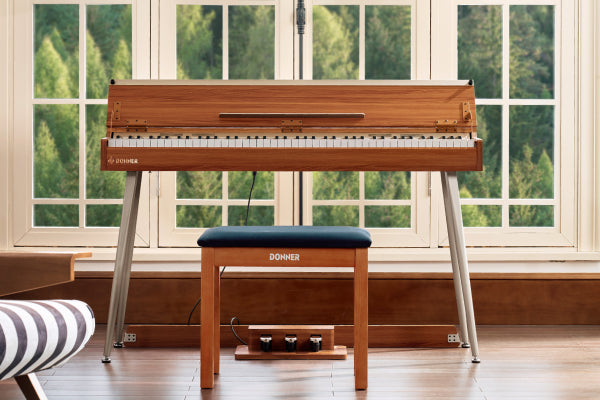
Donner DDP-80 digital piano is a permanent piano setup for a player who values a focused selection over a workstation-style panel. Its 88 graded hammer-action keys provide physical weighting, and six tones leave room for some variety without an extensive sound menu.
The standard box lists the stand parts and three-pedal unit; the piano-only option excludes a bench. USB-MIDI sends playing information, while AUX output carries the instrument’s sound. Some function changes use pedal-and-key combinations, so the uncluttered controls are worth trying as a routine, not just judging by appearance.
Its furniture format suits a room where the whole piano can stay ready, rather than a storage route designed around lifting only the keyboard.
Roland FP-10 Piano Touch in Less Space
Pros
- PHA-4 Standard action
- Twin Piano practice mode
Cons
- Furniture stand sold separately
Roland FP-10 digital piano puts the emphasis on the keyboard mechanism rather than an included cabinet. The 88-key PHA-4 Standard action combines graded weighting with escapement, a simulated point of resistance in the key movement. Twin Piano provides a same-register layout for shared practice.
The 12.3 kg body and supplied pedal switch still need suitable support. A stand and the compatible DP-10 half-pedal accessory are separate choices. USB-MIDI sends performance information; Bluetooth MIDI availability depends on the market version. The panel provides 15 tones, with additional sounds accessed through a compatible app.
Donner DEP-1S Flexible First Setup

Pros
- Full 88-key range
- Adjustable X-style stand
Cons
- Semi-weighted rather than hammer action
Donner DEP-1S digital piano combines the full 88-key range with a lighter, semi-weighted action. Velocity sensitivity and five touch-response levels let the sound react to how you play, but those settings do not turn the mechanism into hammer action. It is a deliberate compromise for chords, songs and a flexible first setup.
The standard kit lists an adjustable double-X stand, sustain pedal, music rest and adapter. Its 128 tones and 100 rhythms support exploring songs, while a metronome and internal note recording/playback give you ways to practise and listen back. The separate support allows a different room arrangement from a furniture piano.
If you put it away after playing, include the stand, pedal and seat in the storage plan rather than considering only the keyboard.
Casio CDP-S110 Portable Battery-Powered Practice
Pros
- Hammer-action keyboard
- Six-AA battery operation
Cons
- Furniture stand sold separately
Casio CDP-S110 digital piano is a practical alternative when the playing location changes. Its 88-key Scaled Hammer Action Keyboard II retains a hammer-action mechanism in a body 232 mm deep and weighing 10.5 kg without batteries.
The specified adapter or six AA alkaline batteries provide separate power options. Ten tones keep the selection relatively focused; USB-MIDI carries performance data, and the combined headphones/output socket provides an audio route. A furniture stand is separate, so battery operation solves the power question rather than the whole support and seating arrangement.
Check the Work Behind Each Practice Session
Imagine an ordinary session from taking the instrument out to putting the room back. The effort around the playing can change which setup represents better value.
Trace the Actual Moving Route
If you pack the piano away after practice, trace the route between storage and the playing position. Count the keyboard body, stand, pedals and seat that need moving, and consider where each will be stored.
Instrument-only weight is useful when lifting a separate keyboard; cabinet weight describes a different object. Compare like with like rather than assuming every digital piano is easy to carry.
Separate Power From Portability
Check the exact power arrangement independently of the format. A piano may use a supplied adaptor, accept batteries, or offer only one of those routes. A USB connection does not establish battery operation or charging.
A removable keyboard still needs secure support, a reachable pedal and a suitable seat. Those parts determine whether the setup works away from its usual position.
Compare Daily Convenience With Extra Sounds
A cabinet can remain ready for the next session. A separate instrument may free the room afterwards but needs placing on stable support each time. Decide which routine you are willing to repeat.
Extra tones and rhythms earn their place if you explore songs and arrangements. If you mainly want to sit down and play piano, convenient access to that routine may matter more than another sound bank.
Questions About a Flexible Practice Space
Does a Compact Piano Have Fewer Keys?
Not necessarily. A compact body can still contain 88 full-size keys. Check the key range and the actual instrument dimensions separately; furniture width, package size and keyboard body depth describe different things.
Will Headphones Make Practice Silent?
No. Headphones provide private listening, but keys and pedals can still make mechanical noise and transmit vibration. Try the instrument in the intended room and keep any support or vibration-control arrangement stable.
Do I Need an Amplifier for Home Practice?
A piano with built-in speakers normally does not need a separate amplifier for ordinary home use. If you plan to play with a group or through another sound system, match the real audio output to that equipment; MIDI alone does not carry the piano’s sound.
Choose a Setup You Will Keep Using
Choose the arrangement that fits both the playing and the setting up. A fixed station can be useful when the piano has a permanent place; a separate body makes sense when the moving and storage route genuinely works. Confirm the support, power and pedal arrangement for your selected option.





Leave a comment
All comments are moderated before being published.
This site is protected by hCaptcha and the hCaptcha Privacy Policy and Terms of Service apply.